
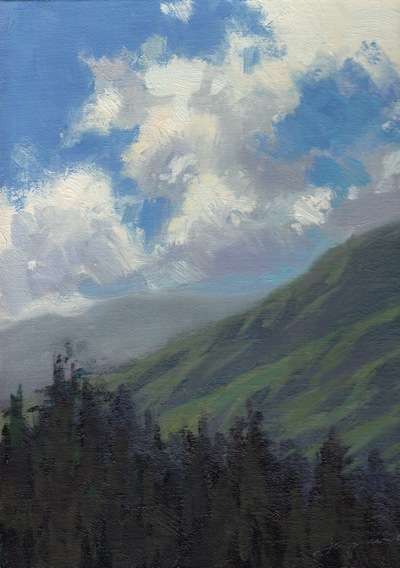
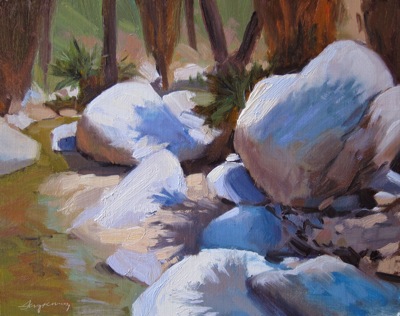
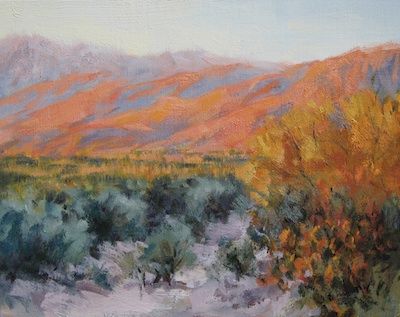



It’s not every day that someone contacts me for permission to use my artwork for publications. One of my paintings is on the cover of a brochure for a water company in Finland, and UC Berkley used an image for a conference brochure. Recently, a science institute asked to use an image on the cover of the proceedings for their conference. Since most of these uses have (what I assume to be) limited commercial value, I usually thank the person that asked and give them the rights to use for free. The latest, “Proceedings of the International Conference on Shape Memory and Superelastic Technologies” seemed like an opportunity to tell you about these requests, because you might learn something that helps your art become more discoverable.

Over the years, the source of traffic to my blog and website has been fairly consistent (except that Facebook is now the 2nd most important source, after Google). The sources in order of volume are: 1) Google; 2) Facebook; 3) Bing; 4) Yahoo; 5) Twitter and 6) Google Images. I’ve summarized/consolidated this data (eg, international versions of Google are part of #1, “Google”), but this gives you a rough idea of where you may source business online.
The lesson I’ve learned about Google (and Google Images) is that it’s really important to think about how you name your image files. At least two organizations now have asked for my Asilomar images, and doing a Google Image Search, you’ll see I have 4 paintings in the search result. I tried searching another of my painting subjects (“Stow Lake Bridge“) and the only two paintings I’ve done of that bridge are ranked #3 and 4, respectively, the first images after the official photographs of the bridge by the city. I also sold some paintings to a hotel on the Truckee River last year, and when I search Google Images for that, I’m the first painting/non-photograph in the results. I think my complete naming of the image (always the place in the title, and sometimes I add the city and state) helps to drive a surprising number of visits to my website. Then again, Google is customizing search results more and more, so I’m not sure if the typical user is seeing these results, but they must be seeing something similar since they are driving business.
Try searching the the names of places you typically paint. Are your images showing up? Are they driving traffic to your website? The results may surprise you.